The idea for this English course for migrant activists has been on my mind for a long time—since around 2018, if I remember right. As a migration researcher and practitioner, I met so many brilliant activists who had so much to offer but were often left out of important spaces and discussions just because they didn’t speak English. After talking with a few fellow activists, we all agreed—something had to be done to help our friends gain the language skills they needed to take part in global conversations on migration.
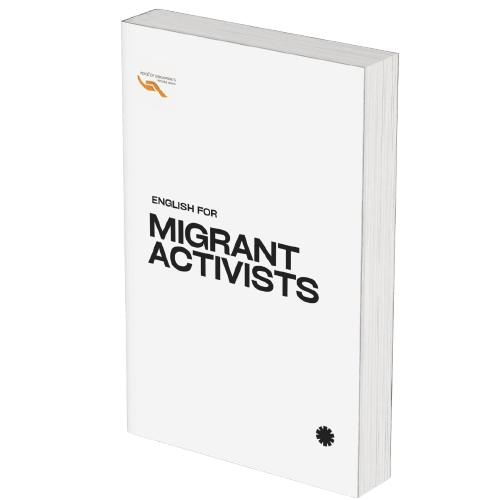
That’s how this book came to life. The goal is simple: to make spaces more inclusive by equipping grassroots migrant activists with the English skills they need to engage in policymaking processes that directly impact their lives. In 2022, I finally had the chance to sit down and properly map out the structure of this book. Thanks to funding from an organization I co-founded in 2016, Voice of Singapore’s Invisible Hands, I was able to hire a consultant, Sisilana D. M. Poyk, to help turn this idea into reality.
This book serves as the core material for the English course, but I’ve also put together some extra resources below to support the grammar lessons in each module. Feel free to use and adapt both the main book and the supplementary materials however best suits your community’s needs!
Supplementary resources, with migration-related examples and exercises:
- Week 1: What is simple present tense?
- Week 2: What is simple past tense?
- Week 3: What is simple future tense?
- Week 4: ‘Be going to’ vs ‘Will’
- Week 6: What is present continuous tense?
- Week 7: What is present perfect tense?
- Week 8: What is past continuous tense?
- Week 9: What is past perfect tense?
- Week 10: What is future perfect tense?
- Week 12: Modals – be able to, can, could, may, might
- Week 13: Modals – must, have to, should
- Week 14: What is conditional sentence type I?
- Week 15: What is conditional sentence type II?
- Week 16: What is conditional sentence type III?
 Yoga Prasetyo